CHAPTER ONE: THE COST
OF FRICTION
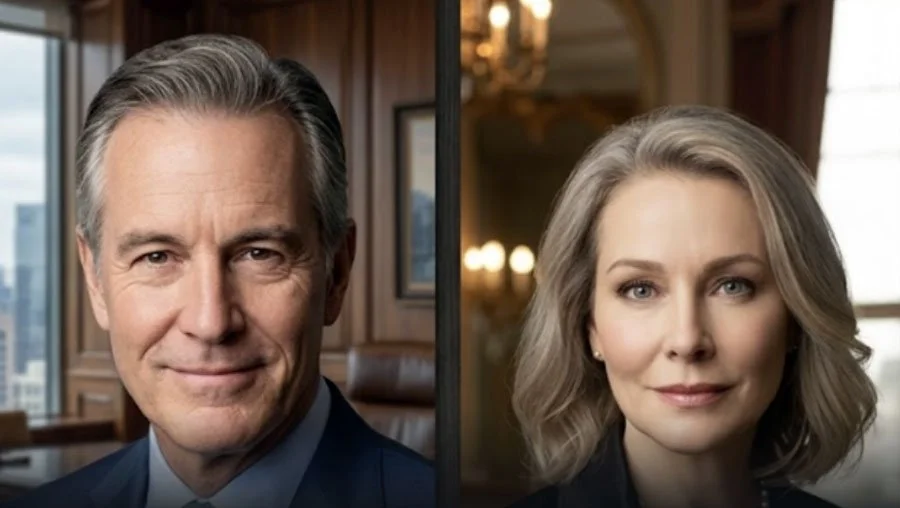
The traffic on the 101 North was more than a nuisance; it was a systemic failure of infrastructure that Peter Frances Talmadge was currently paying for in the most expensive currency he owned: time.
Despite being the 55th richest man in the world, Peter had no control over the gridlock, and his blood pressure was spiking in tandem with the heat rising off the asphalt. Normally, he would be three thousand feet above this, buffered by the pressurized cabin of a Sikorsky helicopter. But the helipad at his San Francisco estate was currently a construction zone—down for a mandated cycle of sensor calibration and landing-system upgrades.
Peter closed his eyes in the back seat and retreated into the mental catalog of his own life. It was a story defined by momentum, even if that momentum had currently ground to a halt. Born to old money in Greenwich, Connecticut, with the requisite Manhattan brownstone and Nantucket summers, Peter had always excelled. His father, a distinguished banker and a devout disciple of capitalism, had purposely given him the moniker Peter Frances Talmadge—PFT for Profit. He had lived up to the brand. He earned his degree in information technology and all things computers at the Massachusetts Institute of Technology in Cambridge just outside of Boston in 1980, meeting his wife, Lauren, at a frat party earlier that same year. When Silicon Valley was still in its infancy and ripe for the taking, Peter had headed west, carving out his first fortune by providing essential services to the likes of Apple, Hewlett Packard, and Intel. Eventually, he pivoted to data centers; today, he operated one of the largest data center conglomerates in the world. Yet, for all his global reach, he couldn't command the car in front of him to move an inch. The silence of the car's cabin only amplified the low hum of his own anxiety.
He was grounded. He was mortal. And he was incensed. The one-hour crawl from his Palo Alto corporate headquarters to Pacific Heights should have been a fifteen-minute flight. He briefly considered calling his Chief Technology Officer (CTO) and ordering a hack into Caltrans to force a "Green Wave" of automated lights through the city, but even for PFT, that was a bridge too far for a Monday.
"Enough," Peter barked from the rear of the armored Range Rover.
"Sir?" Elias, his driver, caught his eye in the mirror.
"The 101 is a parking lot. Pull into the Potrero facility. Now."
Twenty minutes later, the Range Rover hissed to a halt inside the concrete monolith Peter called "The Clean Room." Located in the industrial heart of Potrero Hill—the same streets where O.J. Simpson once ran—this was PFT’s offsite nerve center. It wasn't just a garage; it was a Tier 4 automotive sanctuary built with the same obsessive precision as his global data centers.
The Clean Room: Tech & Infrastructure
Peter stepped out, his MIT-trained brain immediately syncing with the facility’s atmosphere. The "Clean Room" integrated technologies that made most museums look primitive:
AS/RS (Automated Storage & Retrieval System): A series of laser-guided robotic platforms that moved his fleet into a high-density vertical grid, ensuring no human hand ever scuffed a fender.
Predictive Maintenance AI: The facility’s AI performed real-time thermal scans and fluid analysis as cars entered, flagging microscopic part wear before a failure could occur.
Biometric & Gait Access: Entry was secured by palm-vein scanners and gait recognition, while a proprietary low-latency house voice managed his every command.
Precision Environment: The facility featured radiative cooling glass and "breathing" hempcrete walls to maintain perfect, vibration-free humidity and temperature control.
Peter scanned the vertical grid. He didn't collect "investments"; he collected engineering milestones. His eyes skipped over the 1962 Ferrari 250 GTO in Bianco Speciale, the 1994 McLaren F1 (the first ever imported to the U.S.), and the jet-powered 1963 Chrysler Turbine Car. He ignored the sheer elegance of his 1938 Bugatti 57SC Atlantic and the raw aggression of his Lamborghini Miura.
"Vehicle 09, Peter?" the facility’s AI asked.
"The Spyder," Peter growled. "Get it ready."
A robotic platform slid the 2015 Porsche 918 Spyder into the light. Valued at two million dollars, it was a masterpiece of hybrid engineering. Peter climbed into the carbon-fiber tub and hit the ignition. The V8 screamed—a brutal, mechanical middle finger to the silence of the facility. He floored the pedal, burning rubber as he exited the garage, leaving his security detail scrambling to follow.
The Bullitt Run
Peter headed for the hills. He didn't just want to get home; he wanted to channel Steve McQueen In the hit 1968 motion picture Bullitt. At one point Peter bid on that infamous Mustang but someone out bid him. He banked the Porsche onto Taylor Street, the engine roaring as he climbed toward the summit between Vallejo and Filbert. At the crest, the Porsche went ballistic. For a heartbeat, a couple of million dollars of German engineering was weightless, suspended in the salt-heavy San Francisco air.
The landing was violent. A sickening thwack echoed through the chassis as the front carbon-fiber splitter kissed the pavement, sending a spray of expensive sparks into the rearview mirror. Peter chuckled. He knew it would cost a small fortune to return the car to its pristine state, but the adrenaline rush was worth every cent. His credo was simple: Work hard, play hard and seize the day.
As he reached Pacific Heights, the grit of the city evaporated. He coasted past the sprawling limestone of Danielle Steel’s mansion and the stately German Consulate. He turned left onto Broadway, gliding past the "Mrs. Doubtfire" house and the guarded sanctuary of Nancy Pelosi. After crossing Divisadero, he entered the hallowed stretch of Billionaire’s Row.
He pulled into the entry gate of his estate—Terra Linda. A neoclassical masterpiece that hovered over the Bay, it was a fortress of limestone and glass designed for the 21st century. As the car pulled into the sweeping cobblestone drive, the sheer scale of the mansion stood as a testament to both his success and the curated isolation of the billionaire lifestyle.
As the car was ushered through the automotive security portal, sensors scanned the 918 for hazardous materials and tracking devices. Peter drove to the porte-cochère where his butler awaited him beneath the family coat of arms.
The butler Alistair was already there, positioned near the grand entrance with the practiced timing of a man who moved in sync with the house itself. In his hand was a chilled glass of Anchor Steam, the condensation beaded perfectly on the outside.
"Good evening, Sir," Alistair said, offering the beer as Peter stepped out. "A pleasant drive, I hope?"
Peter took the bottle, the condensation a welcome chill against his palm. "Please tell the carport steward that the Spyder needs a new splitter," he said, taking a long pull. "Check the undercarriage."
But the true welcome came from lower to the ground. Bentley, a black Labrador, let out a soft huff of excitement, his tail thumping a rhythmic greeting against the stone. At thirteen years old, Bentley moved with a dignified stiffness—a far cry from the energetic puppy who had been deemed "too distracted by squirrels" to graduate from the Guide Dogs for the Blind program in San Rafael. Their loss had been the family’s gain; the "reject" had become the most loyal fixture in the mansion.
"Hey, old man," Peter chuckled, leaning down to rub the dog’s velvet ears. Bentley leaned his entire weight against Peter’s leg, a deep, contented sigh vibrating through his chest.